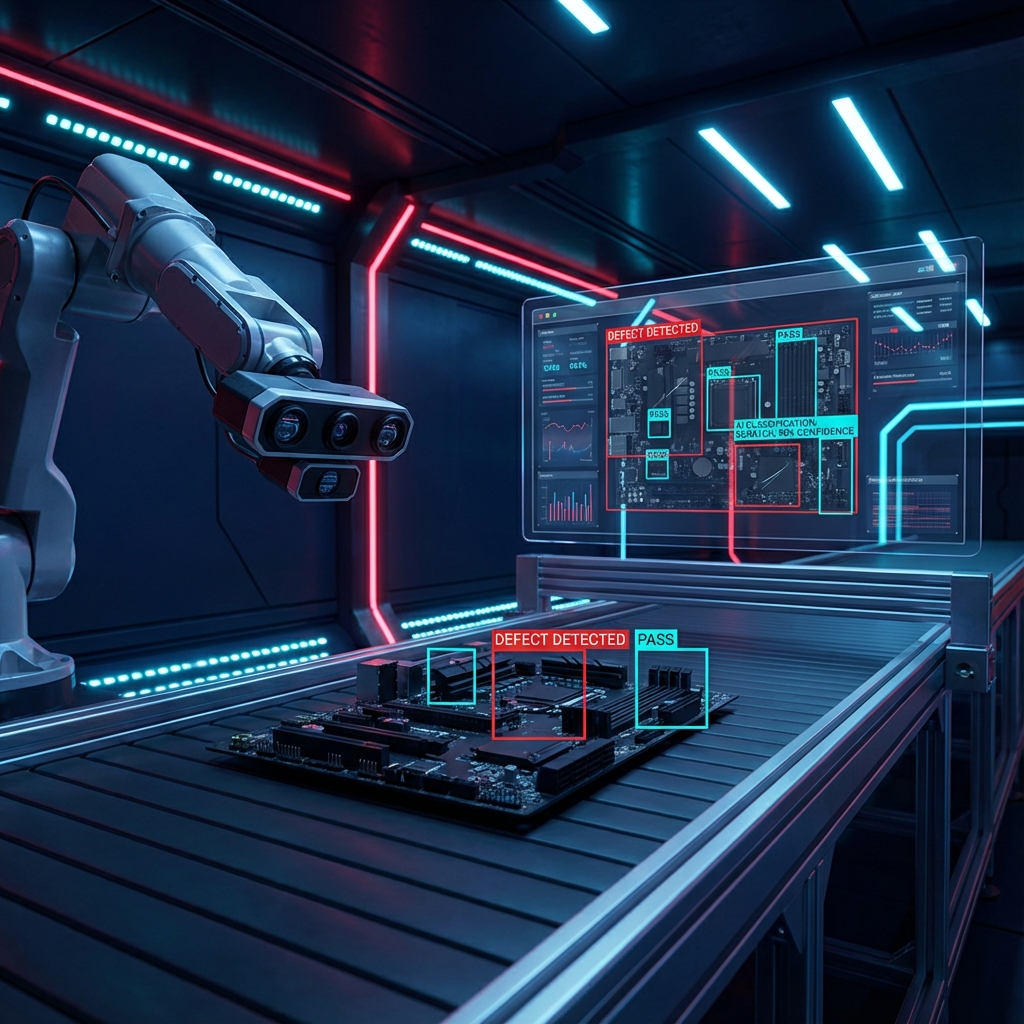
Computer Vision Quality Inspection
3D computer vision system integrated with ABB robots for food industry quality inspection. Intel RealSense cameras capture point clouds at line speed; OpenCV/PCL algorithms segment defects. Path planning generates optimized removal trajectories. Inspects 120 products/minute with 99.2% detection accuracy. Reduced rejected products by 15%.
⚡ Challenges
- •Real-time point cloud processing
- •Sub-millimeter path accuracy
- •Line-speed synchronization
✓ Outcomes
- ✓120 products/minute throughput
- ✓99.2% detection accuracy
- ✓15% reduction in rejected products
📖 Full Details
This computer vision quality inspection system automates defect detection and removal in food processing lines. Combining 3D structured light scanning with ABB robot integration, the system identifies surface defects with sub-millimeter precision and generates optimized robot paths for surgical removal of imperfections.
The vision system uses Intel RealSense depth cameras positioned above the conveyor, capturing point cloud data at line speed. Custom OpenCV and PCL (Point Cloud Library) algorithms process each product, performing surface reconstruction, normal estimation, and defect segmentation. Defects are classified by type (bruises, cuts, discoloration) and size, with only significant defects flagged for removal.
Path planning algorithms consider defect geometry, robot reachability, and cutting tool characteristics to generate removal trajectories. The system calculates approach angles that minimize material waste while ensuring complete defect removal. Multiple defects on a single product are sequenced to optimize cycle time.
ABB robot integration uses the PC SDK for real-time trajectory transmission. The system handles variable conveyor speeds through continuous tracking and predictive positioning—the robot anticipates product arrival and synchronizes its motion with conveyor movement.
Implemented on a potato processing line, the system inspects 120 products per minute with 99.2% detection accuracy. Rejected product rates dropped by 15% compared to manual inspection, while labor could be reallocated to higher-value tasks.
The modular software architecture supports adaptation to other food products with minimal reconfiguration—only the defect classification model requires retraining for new product types.